
Sinus Infection – Symptoms, Causes And Treatment Options
- 18 March 2026
Sinus infection, also known as sinusitis, is a common condition that affects many people worldwide. It occurs when the sinuses become inflamed or infected, leading to discomfort and breathing difficulties.
The sinuses are air-filled spaces located within the bones of the face. When these cavities become blocked due to infection or inflammation, mucus builds up inside them, creating pressure and pain.
Common symptoms of sinus infection include persistent headache, nasal congestion, facial pressure, thick nasal discharge, difficulty breathing through the nose, and reduced sense of smell. Some patients may also experience fatigue and throat irritation.
There are several causes of sinus infections. Viral infections such as the common cold are one of the leading causes. Allergies, nasal polyps, a deviated nasal septum, and exposure to pollution or dust can also contribute to sinus problems.
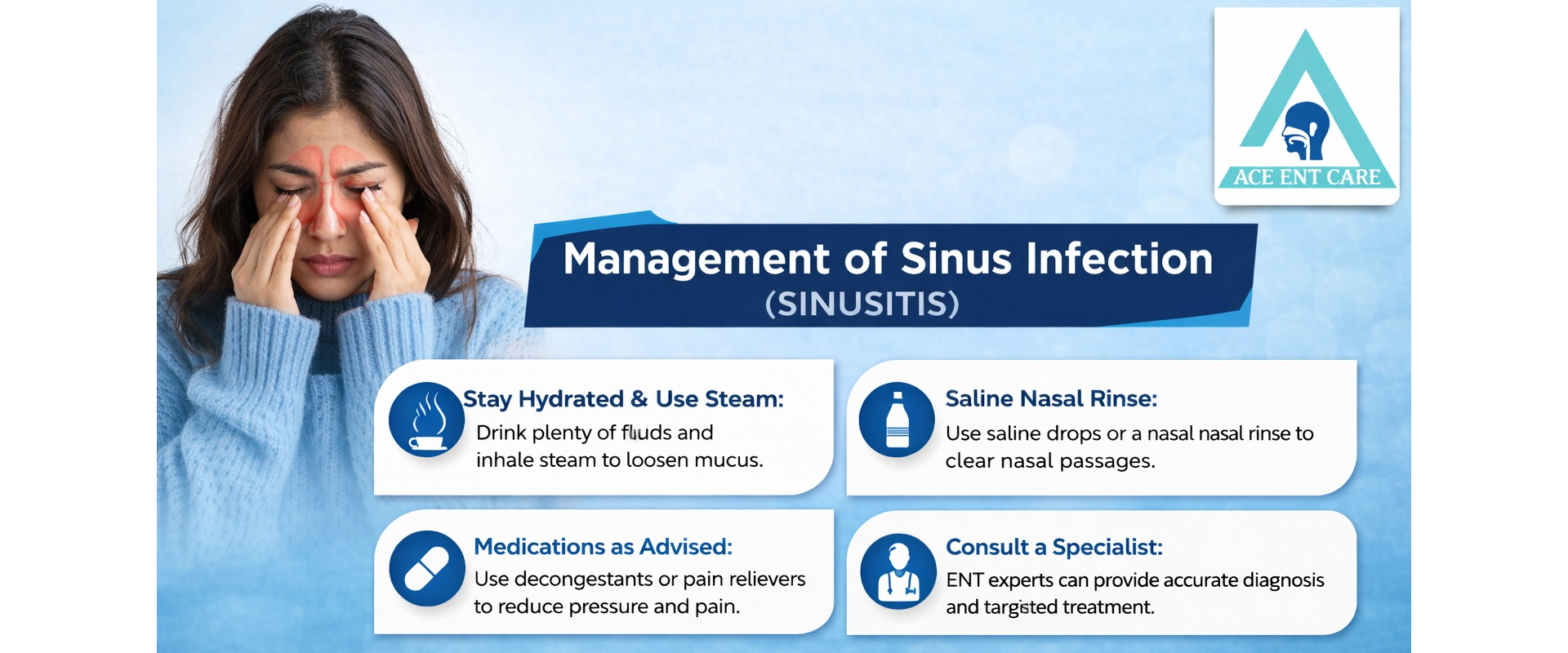
Treatment for sinus infection depends on the severity and underlying cause of the condition. Mild cases may improve with medications, nasal sprays, and steam inhalation. Maintaining proper hydration and avoiding allergens can also help reduce symptoms.
In cases where sinus infections become chronic or do not respond to medication, doctors may recommend advanced treatment options such as endoscopic sinus surgery. This modern surgical technique helps remove blockages and restore proper sinus drainage.
If you experience persistent sinus symptoms for more than a week or frequent sinus infections, consulting an ENT specialist is recommended. Early diagnosis and treatment can prevent complications and improve overall respiratory health.
Related pages: Sinus treatment in Gurgaon | Sinus surgery (FESS) | Septoplasty. To consult Dr. Sahil Kapoor, call +91-8178774813 or visit the appointment page.