
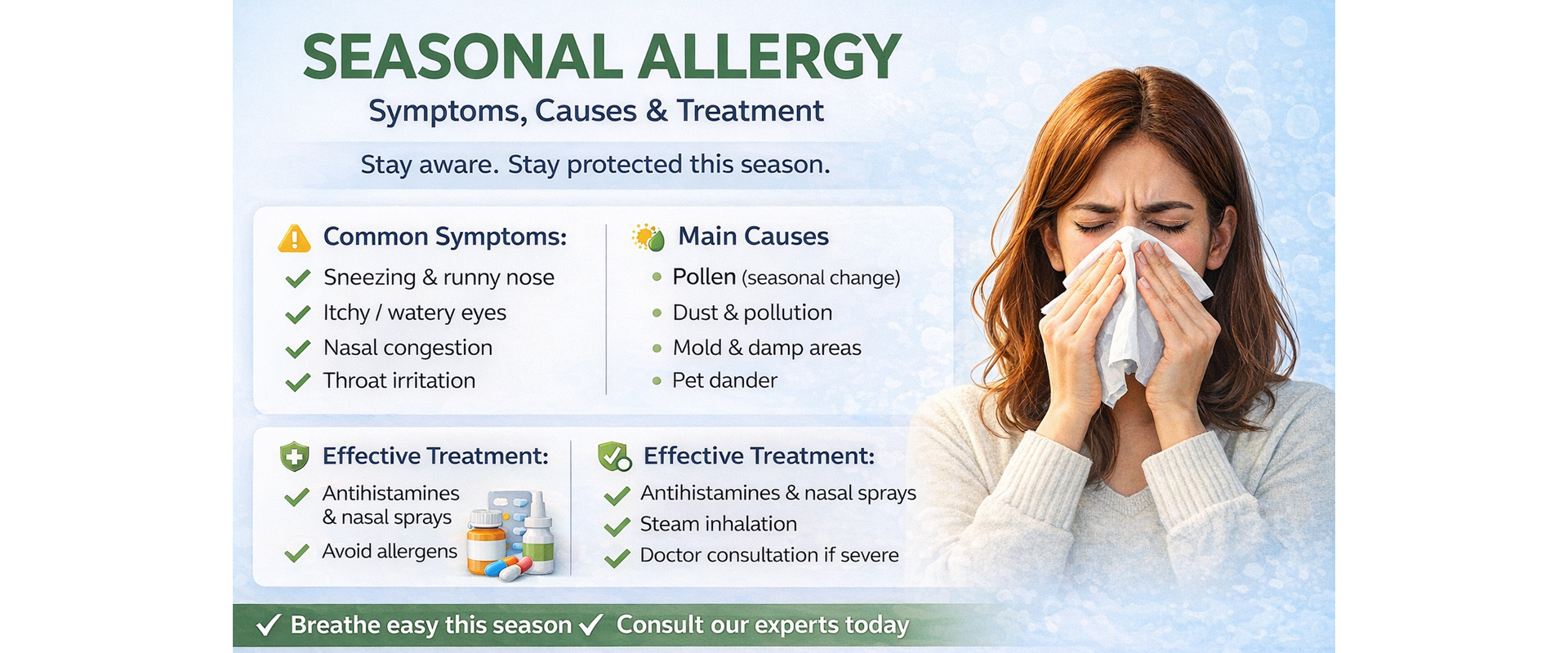
Seasonal Allergy - Symptoms, Causes and Treatment
- 15 Feb 2026
Seasonal allergies affect millions of people every year, especially during seasonal transitions such as spring and early summer. During this time, pollen levels increase in the air, which can trigger allergic reactions in sensitive individuals.
Allergies occur when the immune system overreacts to substances such as pollen, dust, or pollution. These substances are known as allergens. When the body comes into contact with them, it releases chemicals like histamine, which causes allergy symptoms.
Some of the most common symptoms of seasonal allergies include frequent sneezing, runny nose, nasal congestion, itchy eyes, throat irritation, and watery eyes. These symptoms can interfere with daily activities and reduce productivity.
Several factors can increase the risk of seasonal allergies. Exposure to pollen, dust mites, air pollution, and sudden weather changes are some of the most common triggers. People with a family history of allergies may also be more prone to developing allergic conditions.
Managing seasonal allergies often involves a combination of prevention and medical treatment. Avoiding allergens, keeping indoor environments clean, and using protective masks when outdoors can help reduce exposure. Doctors may also recommend medications such as antihistamines, nasal sprays, or other allergy treatments to control symptoms.
If allergy symptoms persist for a long time or become severe, it is important to consult an ENT specialist for proper diagnosis and treatment. Early medical attention can help prevent complications and improve long-term health.
Seasonal allergies may be common, but they should not be ignored. With the right medical care and preventive measures, symptoms can be effectively managed and quality of life can be improved.
Related pages: Allergy test and treatment in Gurgaon | Sinus and blocked nose treatment. To consult Dr. Sahil Kapoor, call +91-8178774813 or visit the appointment page.